
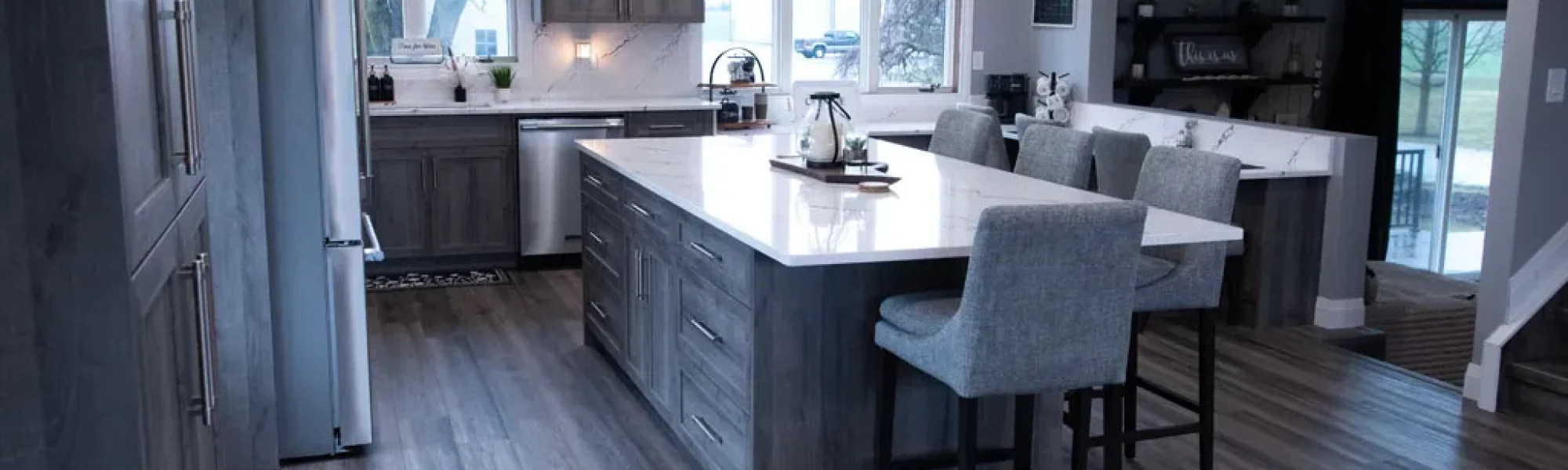
When homeowners shop for Custom Kitchen Cabinets Windsor and the rest of Essex County, the door style gets most of the attention. The finish deserves just as much thought, because it decides how the cabinets look in ten years, not just on installation day. At Cabinetry by Jeremy William, we have designed, built, and finished cabinets in our own facility since 2007, and this guide explains how to choose between wood, painted, and prefinished cabinets for the way our local climate actually behaves.
Why Does Climate Matter for Cabinet Finishes Here?
Windsor-Essex has a climate that is hard on wood. Windsor records the greatest number of days each year with the humidex reaching 35°C or higher of any Canadian city, according to the City of Windsor. For decades, it also held Canada’s record humidex of 52.1, set on June 20, 1953.
Then winter arrives, the furnace runs for months, and indoor air turns dry. Wood responds to both. When humidity rises, the moisture content of wood rises and it expands. When humidity falls, it shrinks.
That seasonal swing is the single most useful thing to understand when you choose a finish. Every finish can look beautiful. The difference is how each one shows the wood’s natural movement.
What Are Your Three Finish Options?
Most custom kitchens fall into one of three finish families, and we offer all three.
Wood finishes use stain or clear coats to show the grain of the wood. They suit traditional kitchens, warm modern designs, and anyone who wants the character of natural material.
Painted finishes give a smooth, solid colour in a custom shade. They suit both classic Shaker kitchens and clean European style designs, and they are the most popular way to bring colour into a room.
Premium prefinished materials arrive with a smooth factory finish already applied. They are built for durability and style, and they are a strong choice for contemporary, flat panel designs.
How Do Wood Finishes Handle Our Climate?
Stained and clear-finished wood is the most forgiving choice for a humid summer and a dry winter. Wood still expands and contracts, but the grain pattern and natural colour variation hide small seasonal gaps at the joints.
Wood finishes also age gracefully. Light scratches tend to blend into the grain instead of standing out, and many species deepen in colour over time, which some homeowners love. If you want a kitchen that looks lived in and warm, wood is hard to beat.
The trade-off is colour. Wood will always look like wood, and some species darken or change tone in sunlight. Look at real samples under your own lighting before you decide.

Why Do Painted Cabinets Sometimes Show Lines at the Joints?
Painted cabinets are beautiful, but it helps to know what to expect before you choose them. A five-piece door is made from separate parts: a frame, rails, and a centre panel. As the wood loses moisture in dry winter air, small gaps can appear where those parts meet, and painted doors will show those seams at the joints. In some cases, unfinished lines may appear around a floating centre panel.
Cabinet manufacturers treat this as normal wood behaviour rather than a defect, and it is generally cosmetic. Paint simply shows it more clearly than stain, because a solid colour makes a fine line easy to see.
None of this is a reason to avoid painted cabinets. It is a reason to manage humidity, which we cover below, and to ask your cabinet maker how doors are constructed. A good Custom Cabinet Maker Windsor homeowners trust will explain how door design and material choices affect how a painted finish holds up.
When Are Prefinished Cabinets the Best Choice?
Prefinished materials are engineered panels with a factory-applied surface, so they behave differently from solid wood. Engineered panels are generally more stable than solid wood when humidity changes, which makes them well suited to slab doors and clean, modern lines.
They are also practical. Because the finish is applied at the factory, prefinished materials can save time on installation, and the surface is built to resist everyday wear. They are a smart choice for busy family kitchens, laundry rooms, and spaces such as home bars where spills are part of life.
How Should You Compare Finish Samples?
Samples tell you more than any photo, but only if you look at them the right way. Bring door samples home, or ask to see them in natural light, and check them at different times of day. A white that looks crisp in the shop can turn warm under evening bulbs, and a stain can look far darker next to your flooring than it did on its own.
Compare samples against the fixed things in the room: the floor, the countertop, the backsplash tile, and the wall colour. Cabinets cover a large area, so a small sample always reads lighter and softer than the finished kitchen will.
Think about wear, too. Lower cabinets near the sink, the dishwasher, and the garbage pull-out take the most handling. Some homeowners choose a painted perimeter with a wood or darker island, which adds contrast and puts the most forgiving finish where the kitchen works hardest.
Finally, ask how touch-ups work. Small chips happen in any busy kitchen, and knowing how a finish can be repaired is part of choosing it.
How Do You Keep Any Finish Looking New?
The best protection for any finish is steady indoor humidity. Cabinet makers commonly recommend keeping your home at about 21°C to 22°C with relative humidity of roughly 35% to 55%.
In Windsor-Essex, that usually means two simple habits. In summer, run your air conditioning or a dehumidifier during the most humid weeks. In winter, use a humidifier on your furnace or in the room if indoor air drops very low. An inexpensive hygrometer will show you where your home sits.
Daily care is simple. Wipe spills promptly, especially around the sink and dishwasher, and use a soft, damp cloth rather than abrasive cleaners. Avoid letting steam from kettles or slow cookers blow directly onto upper cabinets.
Why Does Finishing In-House Make a Difference?
Where and how cabinets are finished affects the result. We do not outsource cutting, assembly, or finishing. Everything is built and finished in our own shop in Maidstone, so you can see your cabinets being made and make changes along the way. Learn more about our shop.
That matters for clients across the county. Whether you are looking for Custom Kitchen Cabinets LaSalle families will use every day, Custom Cabinets LaSalle homeowners want for a laundry or mudroom, Custom Cabinetry Amherstburg clients choose for a heritage home, or Custom Kitchen Cabinets Amherstburg buyers need for a new build, you deal directly with the craftsman doing the work.
The same is true further south. Homeowners searching for Custom Kitchen Cabinets Harrow or a Cabinet Maker Harrow can visit our facility, look at finish samples in person, and see examples in our project gallery. When you are ready, request a free quote or call (519) 819-5880.
Frequently Asked Questions
Which cabinet finish lasts longest in a humid climate?
Wood finishes are the most forgiving because grain hides small seasonal movement. Prefinished engineered panels are also very stable. Painted wood looks great but shows joint lines more clearly.
Are hairline cracks on painted cabinet doors a defect?
Usually not. Wood expands and shrinks with humidity, and painted doors can show seams where the door parts meet. These lines are generally cosmetic.
What humidity should I keep my home at for wood cabinets?
Cabinet makers commonly recommend about 35% to 55% relative humidity at around 21°C to 22°C.
Are prefinished cabinets good quality?
Yes. Premium prefinished materials have a smooth factory finish built for durability, and engineered panels tend to be more stable than solid wood.
Where is Cabinetry by Jeremy William located?
Our shop is at 245 County Rd. 46 in Maidstone, Ontario, and we serve homeowners across Essex County.